After a roof leak or plumbing leak
Even a small leak can keep drywall or insulation damp long enough for growth to start. We help identify how far moisture traveled and what materials are most at risk.
Serving Tulsa, Oklahoma & surrounding areas
Mon–Fri 8am–6pm · Sat 9am–2pm · 539-233-5556
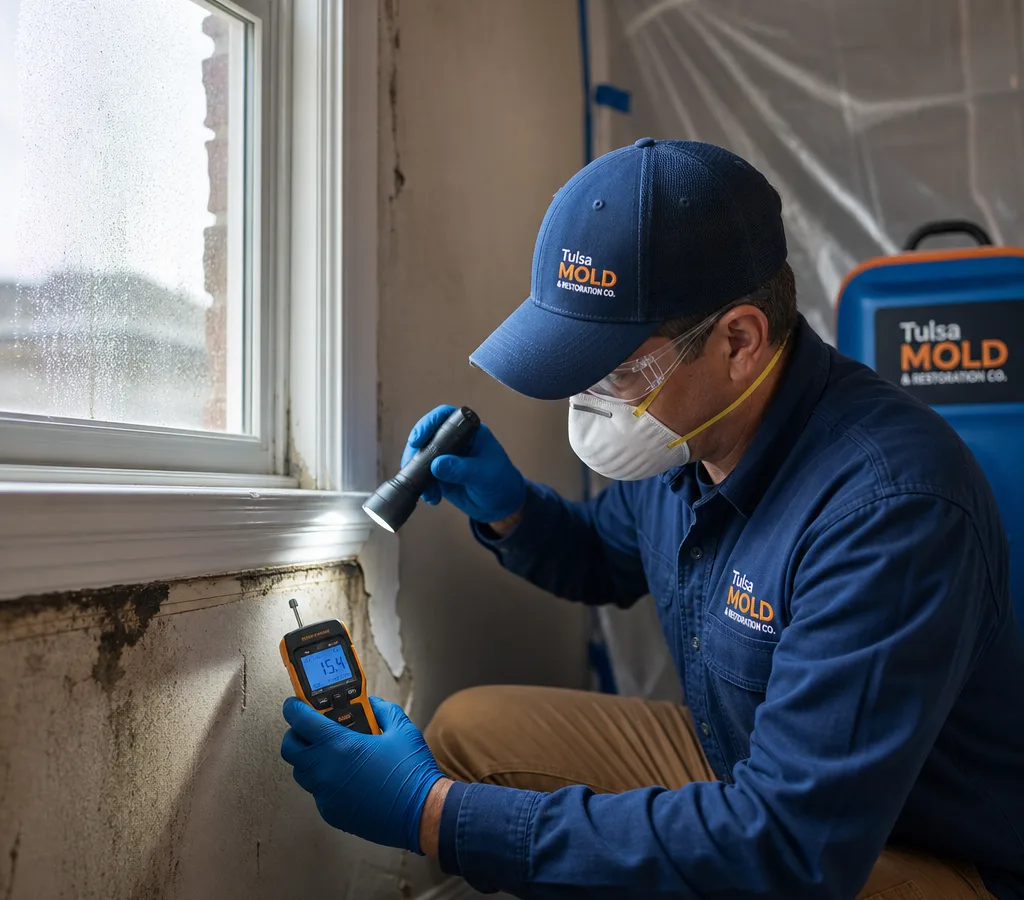
Mold inspection in Tulsa, Oklahoma
If you smell something musty, have had a leak, or see staining you can't explain, our certified inspectors will map the concern, document findings, and give you clear next steps you can use with a landlord, buyer, or contractor.
Fact-finding before decisions
A professional mold inspection is a fact-finding visit. The goal is to figure out whether conditions support mold growth, where moisture is coming from, and what areas need attention.
For a typical mold inspection Tulsa homeowners request, we focus on:
A mold inspection is not the same thing as mold removal. If you already know you need cleanup and want to understand what that can look like, our mold removal services are designed to start with a clear scope and containment plan. Either way, inspection comes first when the situation is unclear, when a property is changing hands, or when you need a written record of conditions.
Measurements before guesses
Mold is a moisture problem first. That's why a good inspection leans on measurements, not guesses.
During our visits in Tulsa, our inspectors commonly use:
If sampling is appropriate for your situation, we'll explain the options and what they can and can't tell you. Not every inspection needs samples. In many cases, moisture mapping and visible evidence already point to the correct next step.
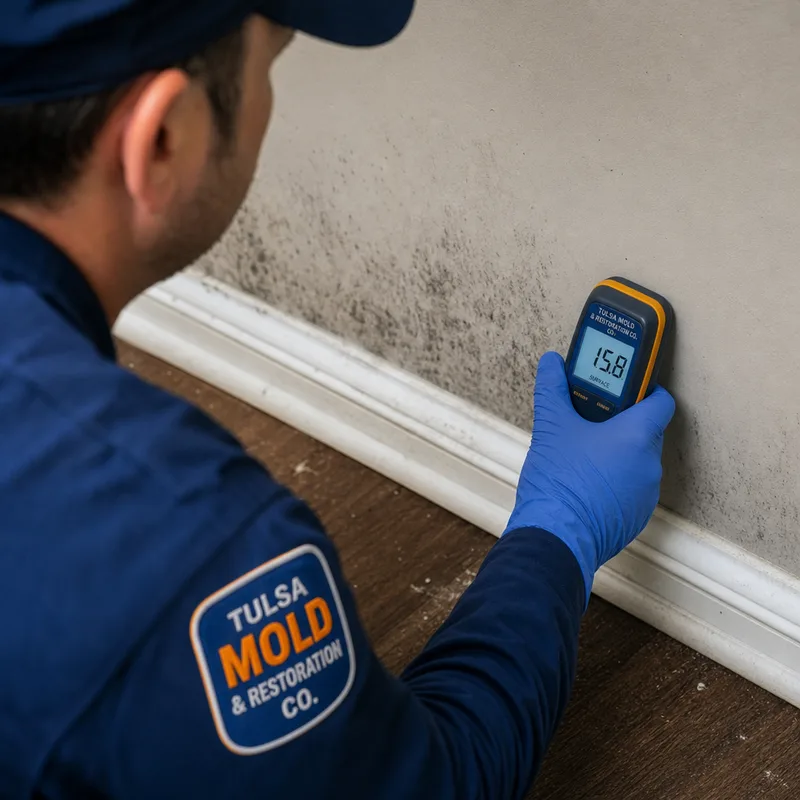
When an inspection adds clarity
Even a small leak can keep drywall or insulation damp long enough for growth to start. We help identify how far moisture traveled and what materials are most at risk.
An inspection gives you a documented snapshot of conditions, especially in areas buyers worry about: bathrooms, around windows, attics, and crawl spaces.
Odors often come from hidden dampness in wall cavities, under flooring, or in HVAC-related areas. We look for moisture clues that explain the smell.
If windows sweat often or rooms feel damp, the fix may be ventilation, HVAC balance, or moisture control. We document conditions so the right trade can correct the cause.
We don't diagnose health issues, but we can inspect the building for moisture, suspect growth, and areas that may need cleaning or repair.
Tulsa-area building conditions
Mold shows up when moisture sticks around. In Tulsa, we often see concerns tied to a few practical realities:
We serve the Tulsa area with practical awareness of how housing stock differs across town. For example, older neighborhoods like Maple Ridge can have original plaster walls and vintage window details that hide moisture longer, while areas with newer builds like Jenks and Bixby may have tighter envelopes where ventilation and HVAC dehumidification make a bigger difference. In Broken Arrow, we often see a mix of newer and mid-century homes, so inspections vary from checking newer HVAC layouts to investigating older plumbing lines and past remodels.
If you tell us what you're noticing, and what changed recently—a leak, new flooring, a bathroom remodel, or an HVAC issue—we can focus the inspection where it counts.
From concern to clear findings
The inspection follows the evidence from your history and concern areas through moisture mapping, optional sampling, and practical recommendations.
Book Your Free InspectionWe start with a few questions: what you're seeing or smelling, when it started, any known leaks, and which rooms feel most affected. This helps us plan the inspection route.
We inspect the concern areas first, then adjacent rooms and typical moisture zones. We take readings and notes that connect symptoms to likely moisture sources.
If sampling will help you document conditions for a transaction, confirm a cleanup plan, or resolve uncertainty, we'll explain types of samples and how results are used.
You get a straightforward summary: where moisture is present, what materials are affected, what needs to be corrected to stop recurrence, and whether professional remediation is recommended.
Property-specific inspection pricing
Mold inspection in Tulsa typically ranges from about $250 to $650 for most homes, depending on size, how many areas need testing, and whether sampling is included. A small, single-area inspection is often on the low end, while larger homes or complex moisture investigations with multiple samples price higher.
Final cost depends on access such as an attic or crawl space, time on site, the number and type of samples, and how much moisture mapping is needed. Exact pricing is confirmed after we understand the property and the concern during scheduling or at the inspection.
Customer experience
“We had a musty smell that kept coming back after a bathroom leak. The inspector found elevated moisture behind the baseboard and explained what was causing it, not just what was visible. The written notes made it easy to get the right repair done.
“We needed documentation before closing on a house. The inspection was thorough, and the findings were explained in plain language so we knew what was urgent and what was just cosmetic.
Answers before the inspection
Most mold inspections take about 60 to 120 minutes, depending on the size of the property and how many areas need moisture checks or sampling. Homes with attic or crawl-space access, multiple suspected rooms, or a complicated leak history can take longer because the inspector needs to trace moisture pathways.
You only need testing when results will change what you do next, such as a real estate transaction, a disputed source of odor, or documentation for a cleanup plan. If there is visible suspect growth and clear moisture damage, moisture mapping and documentation often provide enough direction without samples.
Yes. A musty odor is a common reason for a mold inspection in Tulsa, and the visit focuses on finding hidden moisture in wall cavities, under flooring, around windows, or near HVAC returns. The goal is to connect the odor to a specific damp material or location so repairs target the real source.
Leave the home in its normal condition so readings and observations reflect real life. If you've been running dehumidifiers or keeping windows open unusually, tell the inspector so the notes include that context and moisture readings are interpreted correctly.
You'll get recommended next steps based on what we find: correcting the moisture source, protecting unaffected areas, and determining whether professional remediation is appropriate. If cleanup is needed, Tulsa Mold & Restoration Co. can provide a written scope that matches the affected materials and the level of containment required.
Yes, we inspect both residential and commercial spaces, including rental units where documentation and clear communication matter. For property managers, we focus on pinpointing the moisture source, documenting affected materials, and outlining practical steps to reduce repeat issues.
Start with an on-site inspection
Tell us what you've noticed and where it's happening. We'll schedule a mold inspection in Tulsa, document findings clearly, and explain the next steps to fix the moisture problem and protect the space.