Inspection-led sampling (not random swabs)
We start with a visual assessment and moisture indicators, then choose sample locations based on building science: airflow, water pathways, and where growth typically hides.
Serving Tulsa, Oklahoma & surrounding areas
Mon–Fri 8am–6pm · Sat 9am–2pm · 539-233-5556
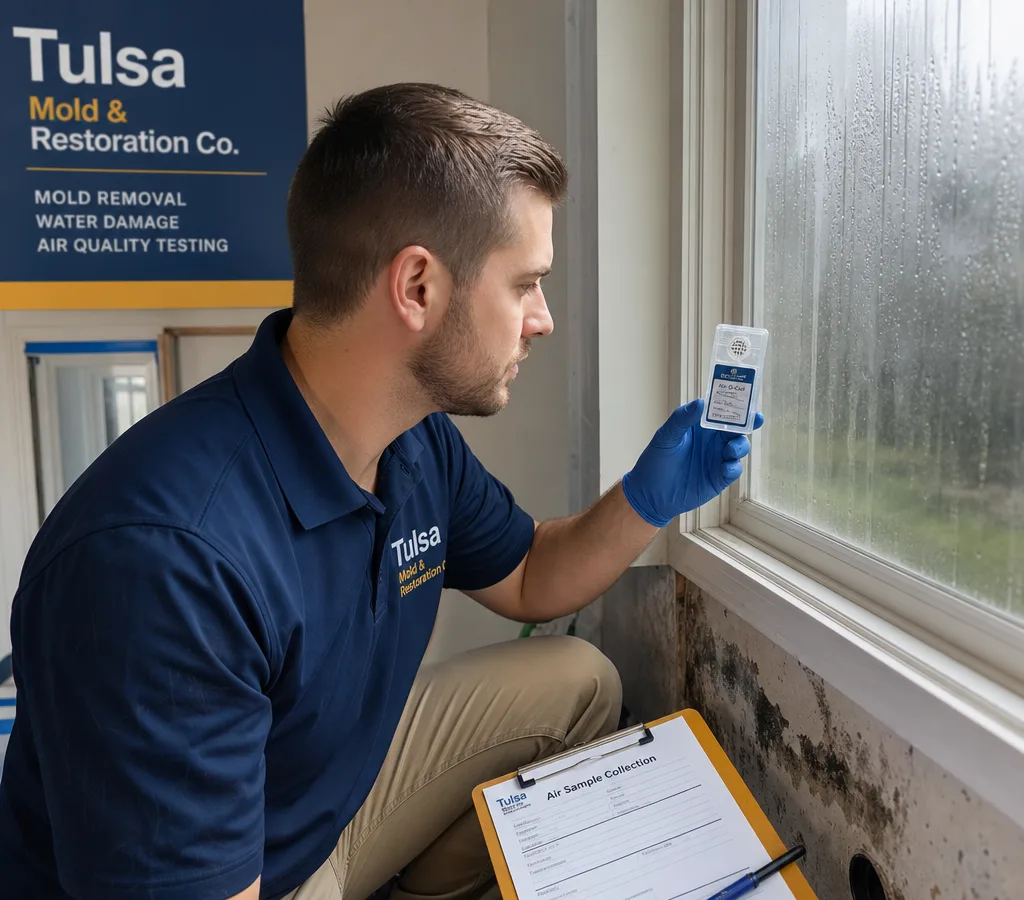
Mold testing in Tulsa, Oklahoma
Get clear, lab-backed results so you can make the right decision for your home or building. Our certified inspectors collect the right samples, document conditions, and explain what the report actually means.
Document conditions with confidence
If you are searching for mold testing Tulsa homeowners and property managers can trust, you likely have a reason: a musty odor that will not go away, recent water damage, recurring allergy symptoms indoors, or visible spotting that you are not sure how to interpret. The point of testing is simple: identify whether mold is present, what types are showing up, and how conditions inside compare to outdoor baseline levels.
Tulsa's weather swings and humidity can make moisture problems show up fast, especially in enclosed areas like closets on exterior walls, HVAC closets, crawl spaces, and around bathroom exhaust routes. Testing does not fix moisture by itself, but it does help you decide the next step with confidence, whether that is targeted cleaning, a moisture repair plan, or a larger remediation scope.
Tulsa Mold & Restoration Co. provides professional mold inspections and sampling in Tulsa, OK (74115). You get written documentation, lab analysis through an accredited laboratory, and straight explanations of what the results mean for your property and the people using it.
Inspection, sampling, and reporting
We start with a visual assessment and moisture indicators, then choose sample locations based on building science: airflow, water pathways, and where growth typically hides.
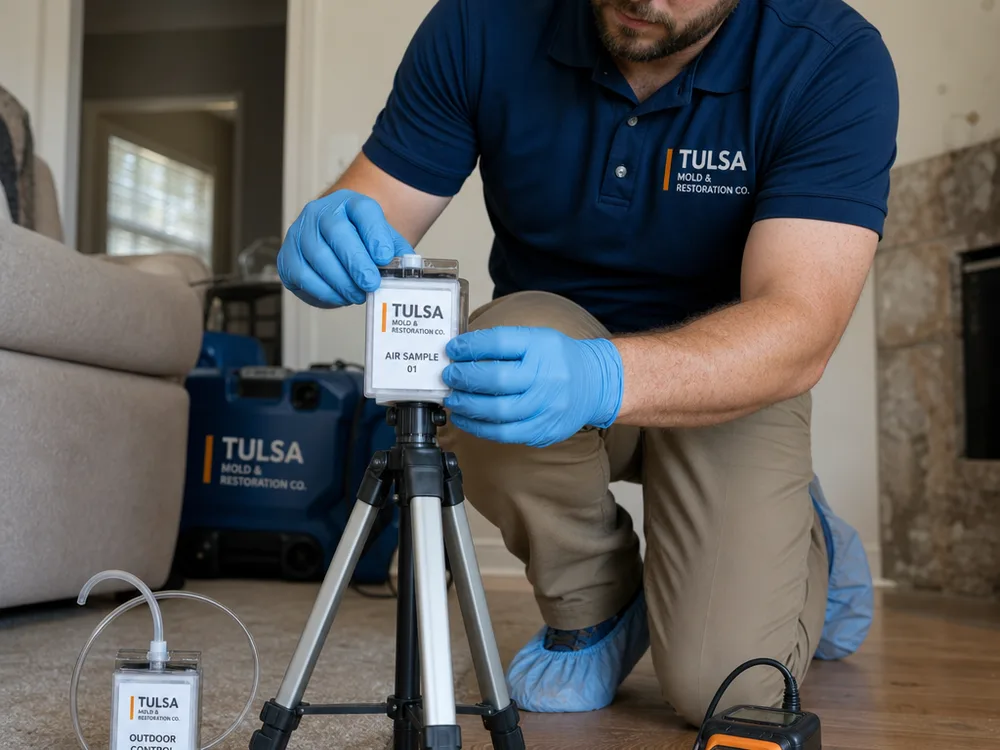
Air cassettes help compare indoor spore loads to an outdoor control sample. Surface swabs or tape lifts help confirm what is growing on a specific material.
Each sample is labeled, documented, and submitted properly so results match the rooms and conditions we observed.
You receive the lab report plus practical context: likely sources, what to watch for, and what to do next based on what was found.
A written record is useful for landlords and tenants, real estate negotiations, and planning repairs when a water event affects multiple areas.
Targeted sampling, useful context
A good mold test is a small investigation. The goal is to capture meaningful samples, not just collect a number.
We begin by asking what changed (a leak, a roof issue, a past flood, HVAC problems, plumbing overflow) and where symptoms show up. We then inspect common risk areas: around supply lines and traps, behind toilets, at window sills with condensation, under sinks, around attic access points, and at transitions where humid air meets cooler surfaces.
From there, sampling is chosen based on conditions:
In Tulsa, older housing stock can include venting quirks, additions, or sealed-up cavities that trap humidity. Neighborhoods with a mix of older and renovated homes, like Midtown, often have areas where new insulation meets older assemblies and moisture patterns are less predictable. South Tulsa's larger homes frequently have multiple HVAC zones, which can create uneven humidity and temperature that shows up in isolated rooms. In Broken Arrow and Owasso, fast-growing subdivisions still see moisture issues when building envelopes settle and small drainage or ventilation problems go unnoticed. We account for these realities when selecting sample locations.
Inspection through results review
The sampling plan responds to the property's history, moisture clues, room layout, and the questions the test needs to answer.
Book Your Free InspectionWe confirm the reason for testing, any recent water events, and whether the property is occupied so we can plan sample types and access.
We look for staining, condensation patterns, ventilation issues, and moisture-prone materials like drywall, carpet pad, and wood framing.
We collect the right mix of air and surface samples, including an outdoor baseline when air sampling is performed.
Samples go to a qualified lab for microscopic analysis. You receive a written report with findings tied to each sample location.
We walk through what the report indicates, likely contributing moisture sources, and what a reasonable plan looks like for your situation.
On-site sampling plan and pricing
Mold testing in Tulsa typically ranges from about $250 to $750+, depending on the size of the property and how many samples are needed. A basic inspection with a small number of air or surface samples is usually on the lower end, while larger homes, multi-unit properties, or situations needing multiple indoor air samples and an outdoor control sample cost more.
Final pricing depends on the number of rooms sampled, access (attic, crawl space, tight mechanical areas), whether visible growth needs surface confirmation, and how quickly results are needed. The exact cost is confirmed at the inspection once the sampling plan is set.
Test when the answer affects the next step
Most requests for mold testing Tulsa properties fall into a few practical categories:
Testing is also a useful starting point when you already know you have a mold problem but need a clear scope before any work begins. If results point to active growth that requires removal, our team can also help you plan next steps for mold removal in Tulsa based on what the inspection and lab report show.
If you are smelling mold, seeing recurring staining, or dealing with a recent leak, an inspection with documented sampling is the fastest way to understand what is happening and what it will take to fix it.
Book Your Free InspectionAnswers before sampling
Most lab results are available within a few business days after sampling, and timing can vary based on lab workload and the number of samples submitted. We will tell you what turnaround to expect when we set up the inspection and confirm sample counts.
If we perform air sampling, an outdoor control sample is standard because it gives context for what is normally in the air that day in Tulsa. Indoor air results are interpreted by comparing spore types and levels indoors to the outdoor baseline.
A DIY kit can show that something grew on a plate, but it usually cannot tell you whether the indoor environment is abnormal, where the source is, or how it compares to outdoor air. A professional mold inspection pairs sampling with building conditions, moisture clues, and a lab report tied to specific rooms and materials.
We prioritize the areas most connected to moisture: bathrooms, under-sink cabinets, laundry areas, HVAC closets and return pathways, around windows with condensation, attic access points, and any room that had a leak. Sample locations are chosen based on what we observe during the walk-through.
Testing can strongly suggest a hidden source when indoor air results show elevated spores or types that do not match the outdoor sample, especially when paired with odor and moisture indicators. Confirming the exact location sometimes requires targeted access, guided by the inspection findings.
You can test one room if the concern is localized, such as a bathroom with staining or a single bedroom with odor. If symptoms are widespread or the HVAC system may be involved, multiple indoor air samples usually give a clearer picture of how far the issue extends.
For the most useful air samples, avoid heavy cleaning, running ozone devices, or using foggers right before the visit because they can temporarily alter airborne levels. If possible, note when odors are strongest, where staining appears, and any dates of past leaks so we can focus the inspection.
Start with an on-site inspection
Tell us what you are noticing and where it is happening. We will schedule a mold inspection in Tulsa, collect the right samples, and provide lab-backed results you can act on.