Clear scope before work starts
We spell out what gets removed, what gets cleaned, and what needs to be corrected so you can make decisions with the full picture.
Serving Tulsa, Oklahoma & surrounding areas
Mon–Fri 8am–6pm · Sat 9am–2pm · 539-233-5556
Mold remediation in Tulsa, Oklahoma
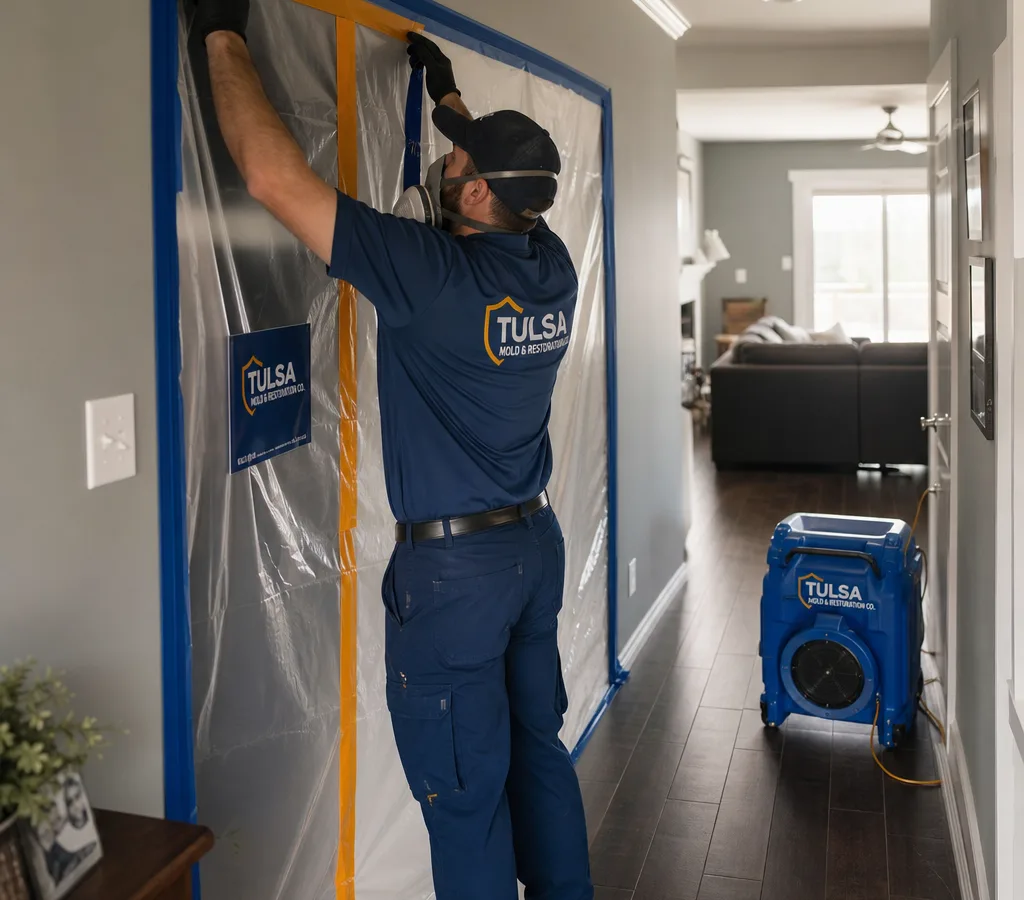
If you are dealing with musty odors, visible growth, or a recent leak, our crew contains the area, removes contaminated materials safely, and leaves you with a clear plan to keep it from coming back.
Control moisture and contamination
Searching for mold remediation Tulsa homeowners can rely on usually means something already happened: a plumbing leak, roof issue, HVAC condensation, or water intrusion after storms. Mold is a moisture problem first, and remediation only works when cleanup and moisture control are treated as one job.
Tulsa Mold & Restoration Co. focuses on practical, workmanlike remediation: identify the wet materials, isolate the work zone, remove what cannot be cleaned, clean what can, and verify the space is dry and safe to rebuild. You will get a written scope, straightforward expectations, and a plan that fits the way your home is actually built.
We work across Tulsa, including older housing near Midtown where wall assemblies can hide moisture, and newer builds in South Tulsa where attic and HVAC issues can still drive condensation and mold in tight spaces. No matter the neighborhood, the steps stay the same: protect the rest of the home, remove contamination, and address the moisture source so the problem does not repeat.
Controlled removal and cleaning
Professional mold remediation is controlled demolition and cleaning under containment. The goal is to keep spores and dust from spreading to clean areas while the affected materials are removed and the remaining surfaces are cleaned.
Typical scope elements include:
If your situation is limited to a small area with no material removal, you may be looking for cleaning rather than full remediation. When people use the phrase mold removal in Tulsa, they are often describing this entire process, not just wiping a surface. We can explain what level of work your home actually needs after an on-site look.
Disciplined property protection
We spell out what gets removed, what gets cleaned, and what needs to be corrected so you can make decisions with the full picture.
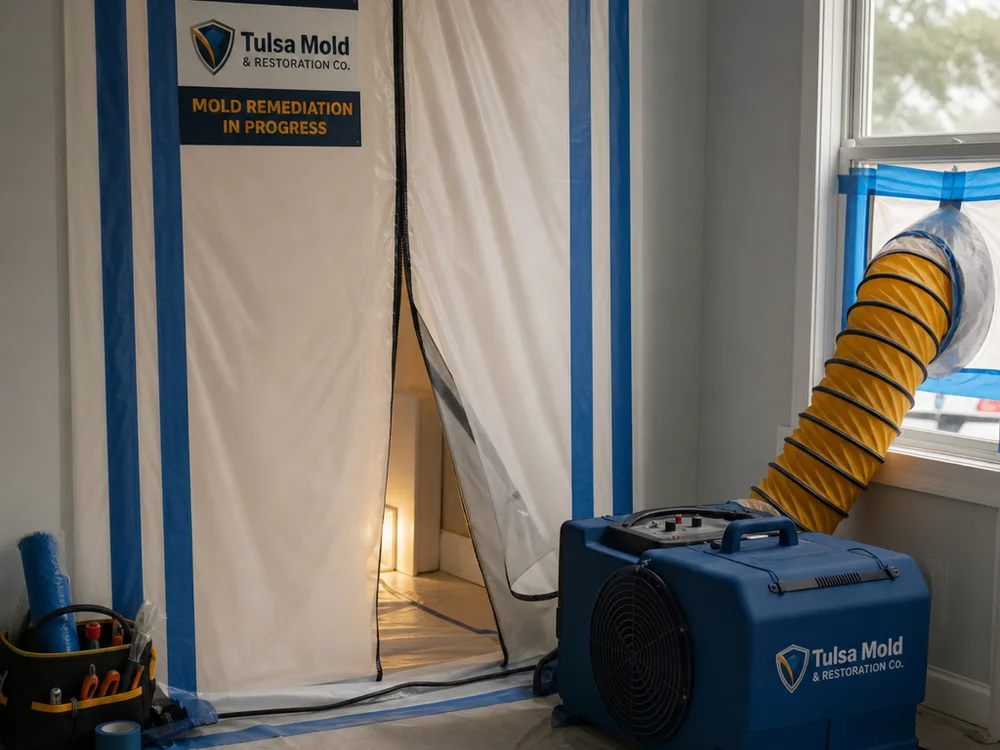
Containment, floor protection, and controlled pathways reduce cross-contamination and keep dust out of living areas.
HEPA filtration, HEPA vacuuming, and detailed wipe-downs are standard when disturbing contaminated materials.
We look for the driver: leaks, condensation, poor drainage at the exterior, or ventilation issues, and we document what should change.
You will know what happens day by day: setup, removal, cleaning, drying time, and what has to be true before rebuilding begins.
When you are living in the home, we plan access, noise, and work hours so the project is disruptive for as little time as possible.
Assessment through verification
Each phase responds to the affected materials, moisture conditions, access, and containment needs found at your property.
Book Your Free InspectionWe start by walking the affected area, checking for hidden moisture, and looking for the conditions that allowed growth, including leak paths, condensation points, and ventilation issues.
We isolate the work area with plastic sheeting and establish negative air pressure with HEPA filtration so disturbed spores and dust stay inside the work zone.
Porous materials that cannot be reliably cleaned are removed in a controlled way, double-bagged, and taken out through planned routes.
We HEPA vacuum and wipe remaining structural materials and use antimicrobial products when appropriate for the substrate and conditions.
We dry the area to stable conditions and confirm what is needed before rebuild. If third-party clearance testing is desired, we coordinate timing for after cleaning and drying.
On-site scope and pricing
Mold remediation in Tulsa typically ranges from about $1,500 to $6,000 for many residential jobs, with small, contained areas sometimes closer to $800 to $1,500 and larger projects with wall cavity or HVAC involvement reaching $8,000+.
Your price depends on the affected square footage, how much drywall or flooring must be removed, how many containments are required, access such as crawlspaces and tight attics, and how long drying and filtration need to run. The exact cost is confirmed after an on-site inspection and a written scope.
Customer experience
“We had mold behind the laundry room wall after a slow leak. The crew sealed everything off, removed the damaged drywall, cleaned the framing, and kept dust out of the rest of the house. The scope was clear and matched what they did.
“After a bathroom exhaust issue, we kept getting a musty smell. They found damp insulation in the ceiling area and explained what needed to change so it would not come back. The work area stayed contained the whole time.
Answers before work begins
Most mold remediation projects take 1 to 3 days of active work, plus additional drying time if materials are still wet. A small closet or localized wall area can sometimes be handled in a day, while multi-room contamination or wet crawlspace conditions usually require longer drying and repeated moisture checks before the space is ready to close up.
Yes, many Tulsa clients stay in the home during remediation when the work is properly contained and access is planned. We isolate the work zone, run HEPA filtration, and set rules for pathways and HVAC operation so living areas stay separated from the remediation area.
When drywall or insulation is contaminated, removal is often the correct approach because porous materials are difficult to clean to a reliable standard. We cut back to clean, dry material, then clean and HEPA vacuum the remaining framing so the area is ready for rebuilding once moisture conditions are stable.
Mold returns when moisture returns, so preventing recurrence depends on fixing the moisture driver as part of the plan. We document likely sources such as plumbing leaks, roof or flashing issues, condensation from poor ventilation, or humidity problems so you can correct them before the area is closed up.
Clearance testing is optional, but it can be a good idea when there was significant growth, when sensitive occupants are involved, or when the work was extensive. If you want clearance, it is best done by an independent indoor environmental professional after cleaning and drying are complete and before rebuild materials go back in.
Stop the moisture source if you can do so safely, avoid disturbing the area because scrubbing can spread spores, and keep doors to the affected room closed until a plan is in place. If the HVAC system serves the area and you suspect contamination near returns or supply ducts, minimizing airflow through that zone until an inspection can help prevent spread.
Start with an on-site inspection
Tell us what you are seeing and what happened—leak, odor, visible growth, or a recent storm. We will inspect the area, explain the scope in plain language, and outline the next steps to clean up safely and prevent repeat problems.